Reefs Renew, Maladives
The project regenerates coral reefs with 3D-printed structures on Dhigu and empowers the community on Magoodhoo through education and sustainable sources of income. It promotes biodiversity, coastal protection and economic resilience.
The project
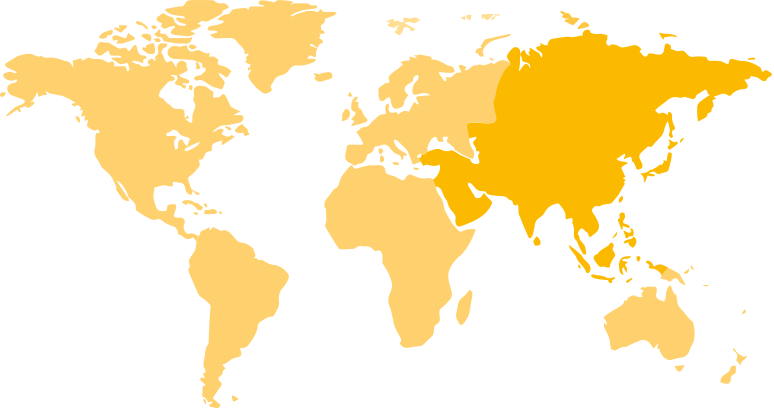
The project on the Maldivian island of Dhigu aims to regenerate degraded coral reefs while empowering the local community on Magoodhoo through educational programs and income-generating activities. The Maldives, as part of the Small Island Developing States (SIDS), is particularly vulnerable to the effects of climate change, which is why protecting coral reefs is essential. Healthy coral reefs not only provide coastal protection, but also secure the livelihoods of the local population through fishing and tourism.
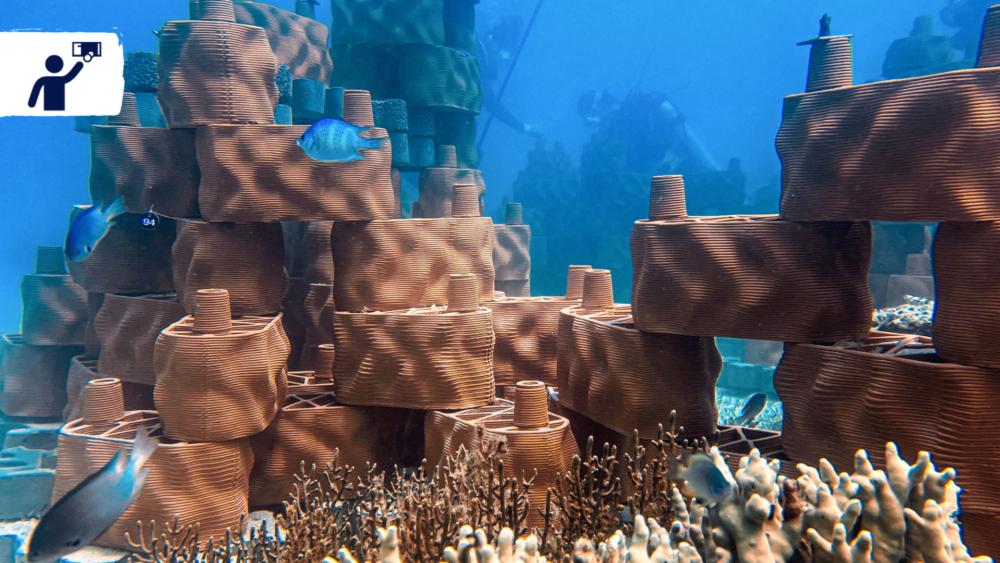
The project promotes the restoration of coral reefs in order to secure biodiversity and fish stocks. For this purpose, coral building blocks are produced using 3D printing and installed on site. The special surface structure of the clay used makes it easier for corals and other sea creatures to settle there. At the same time, educational measures should raise awareness among the community – especially the younger generation – about the importance of coral reefs and sustainable practices. In addition, new income opportunities should be created, for example by involving fishing families in protecting and monitoring the reefs or by training swimming instructors.
The local population is involved in the activities through a combination of practical workshops, school visits and community events. New reef structures are being built to serve as habitat for corals and marine life. Regular monitoring of regenerated reef structures ensures that their health and resilience can be assessed and protected in the long term.
At the end of the three-year project period (2025-2027), around 30 to 40 people are expected to benefit directly, including in particular fishing families and children. In the long term, the knowledge should be passed on within the community. The regenerated reefs create an improved ecosystem that strengthens marine biodiversity and forms the basis for sustainable fishing. The educational programs not only promote responsible environmental behavior, but also offer participants new economic perspectives in tourism and nature conservation. In addition to the direct environmental benefits, the project also strengthens social cohesion and community resilience by alleviating poverty through sustainable sources of income and improving access to knowledge and job opportunities.