Agriculture shapes future, Uganda
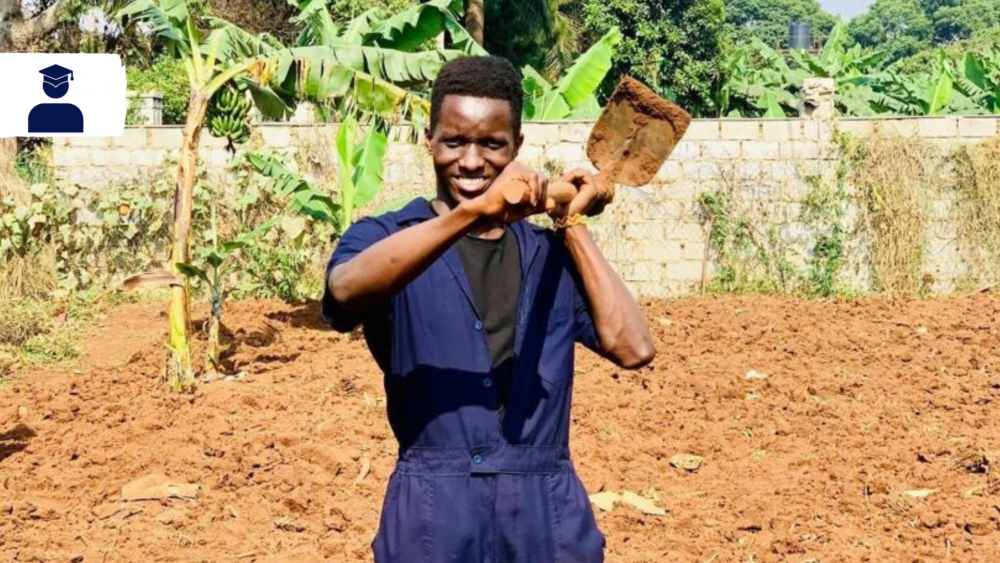
In Buyala, Uganda, a large-scale organic farm is being established that uses sustainable agriculture as a driver of income, employment, and climate adaptation. Through higher yields, local value creation, and reinvestment in new farms, a growing, self-sustaining network is emerging that creates opportunities for young people.
The project
Uganda is an agricultural nation, yet many families rely on small-scale subsistence farming with low yields. A lack of capital, unpredictable rainy seasons, and the use of harmful chemicals keep many people in poverty. This is precisely where the project comes in, using sustainable agriculture as a driver for income, employment, and social change.
In Buyala near Jinja, a large-scale organic farm is being established that operates entirely without synthetic fertilizers or chemical pesticides. Instead, it relies on organic fertilization, mulch, minimal tillage, and circular agriculture. This method has already been successfully tested: yields are two to three times higher than with conventional farming methods. The farm thus serves not only as a production facility but also as a model operation for local farmers.
The operation creates jobs for young adults and offers hands-on training in organic farming, animal husbandry, and value creation. Through local processing, such as the milling and packaging of maize, a larger portion of the value added remains in the region. An integrated irrigation system enables year-round production and reduces risks associated with climate change.
50% of the farm’s profits are reinvested to establish additional organic farms in other regions of Uganda. This creates a self-sustaining network that generates income, disseminates knowledge, and opens new opportunities – step by step, by the community, for the community.