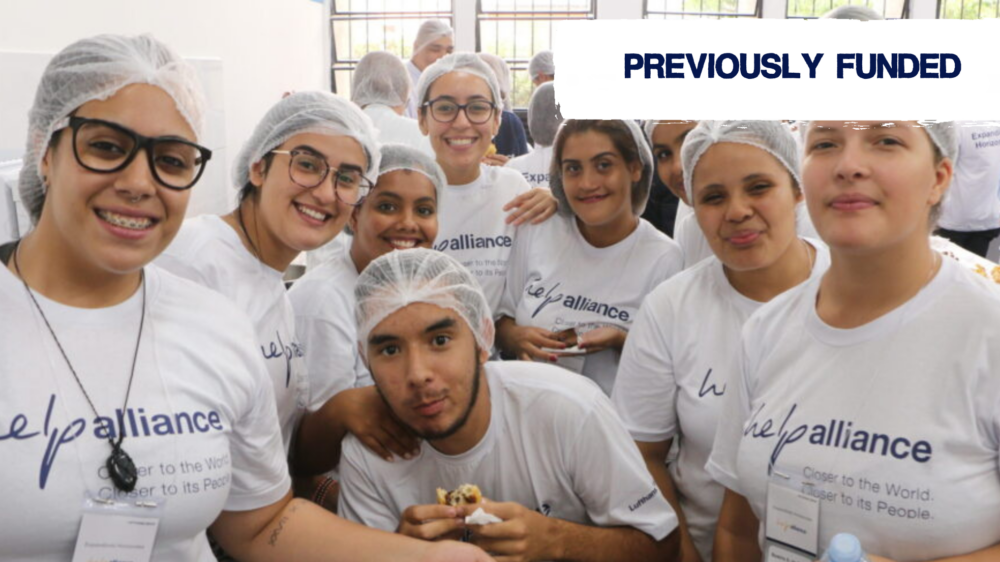
Expanding horizons freshly baked
In addition to practical baker training, young people from low-income backgrounds are given the know-how they need to lead a self-determined life.
Project Background
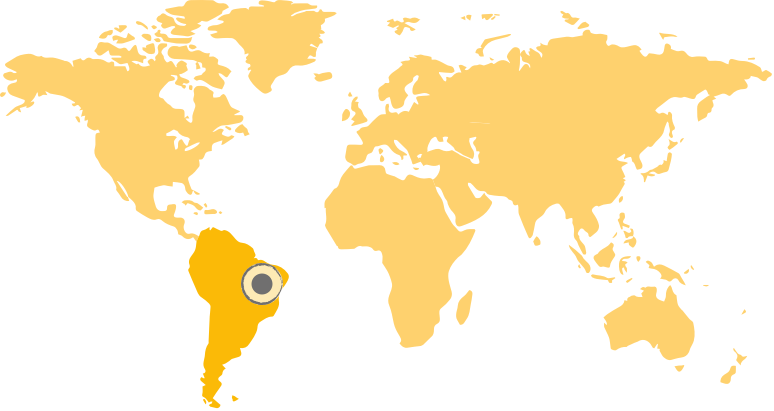
Despite the São Paulo-Guarulhos airport and the multinational companies located in the area, the outskirts of the city of Guarulhos are extremely underprivileged and suffer from poor educational opportunities, high crime rates, and high unemployment and other related problems. The considerable social inequality seen throughout Latin America also applies to access to education: School success depends heavily on the economic background of the family. As a rule of thumb, public education tends to be of poorer quality than private education. Middle- and upper-class families therefore largely opt for private education to give their children a better starting point. This option is often not available to lower-income families. In addition, there are a large number of students who drop out of their education before officially graduating. The reasons for this are varied, but they range from the need to work to support the family financially to various family problems. As a result, the young people are denied opportunities for social advancement.
Our partner organization “Escola Natasha” was founded as a center of excellence and education with the aim of giving local young adults the opportunity to build a self-determined life through vocational training, thus closing the gap left by the public education system in developing countries in general. The school’s mission is to prepare young people to become dynamic, respectful and innovative professionals who are well equipped for the job market.
Target Group
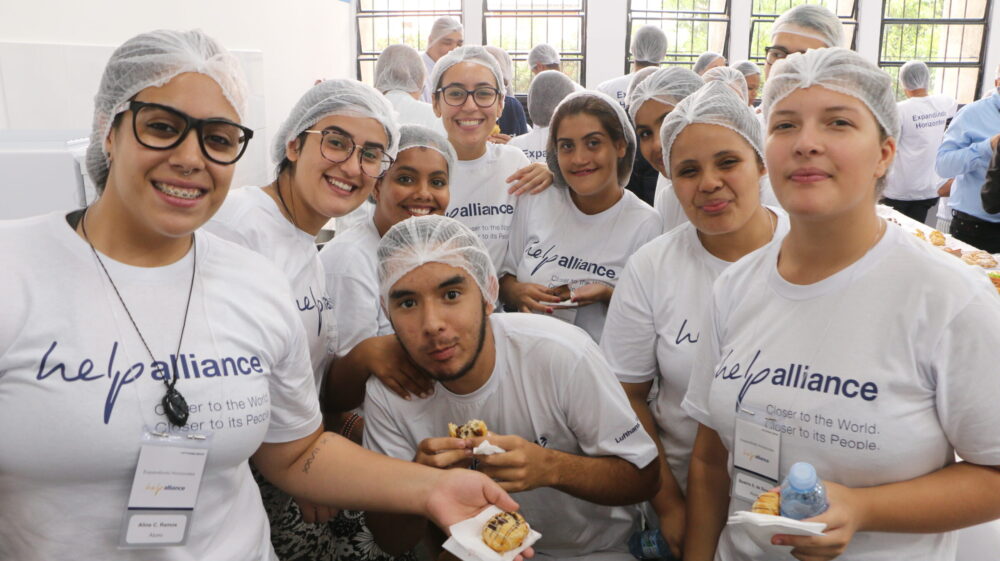
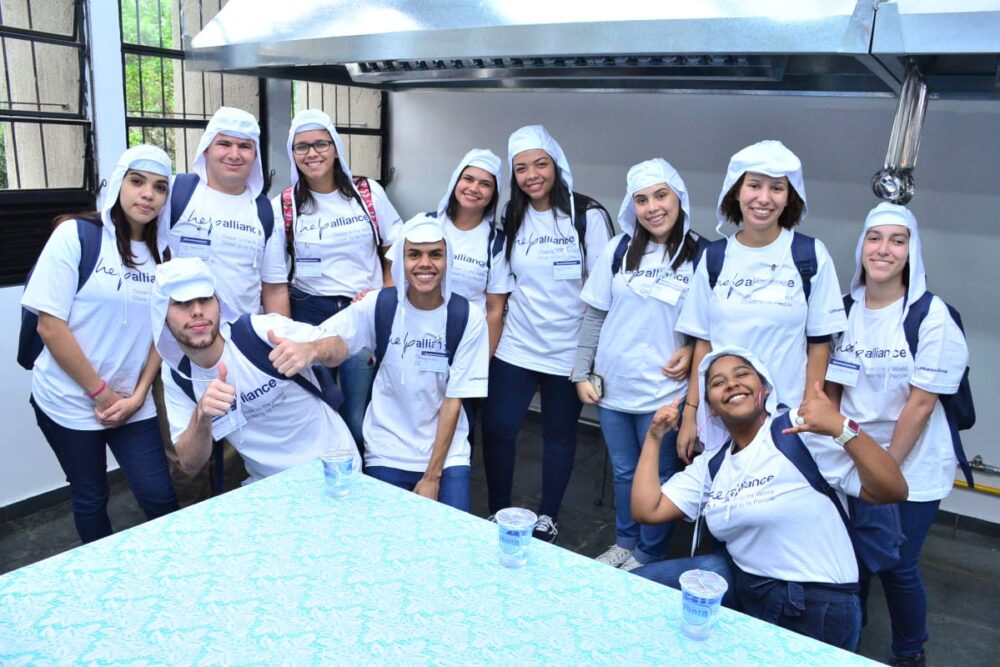
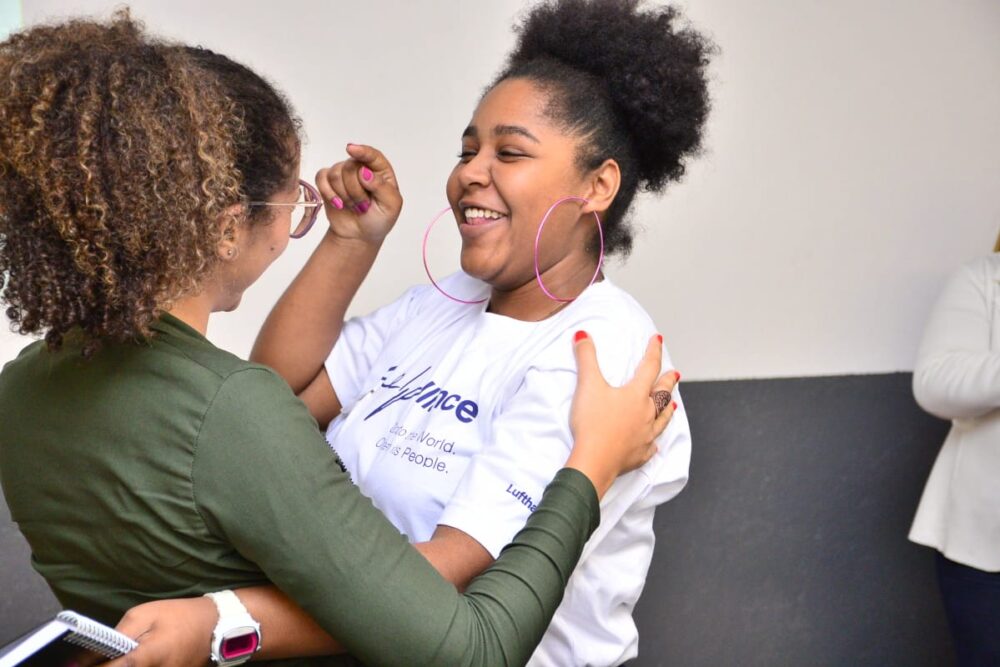
The project targets youth and young adults from low-income backgrounds living in the outskirts of Guarulhos. Indirect beneficiaries are also the families of the students, as well as the entire local community.
Project Goals
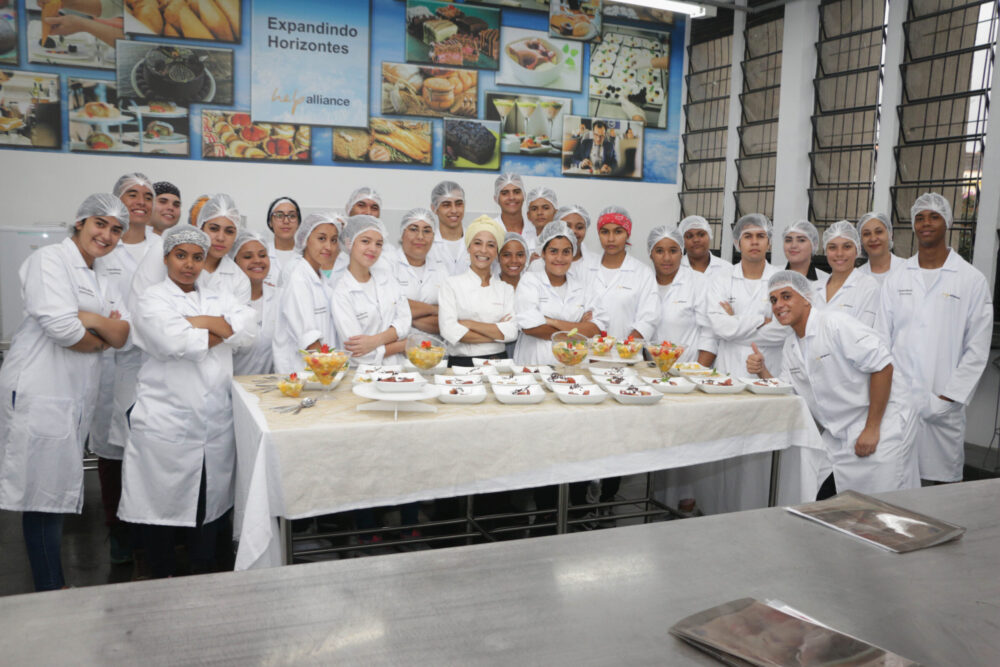
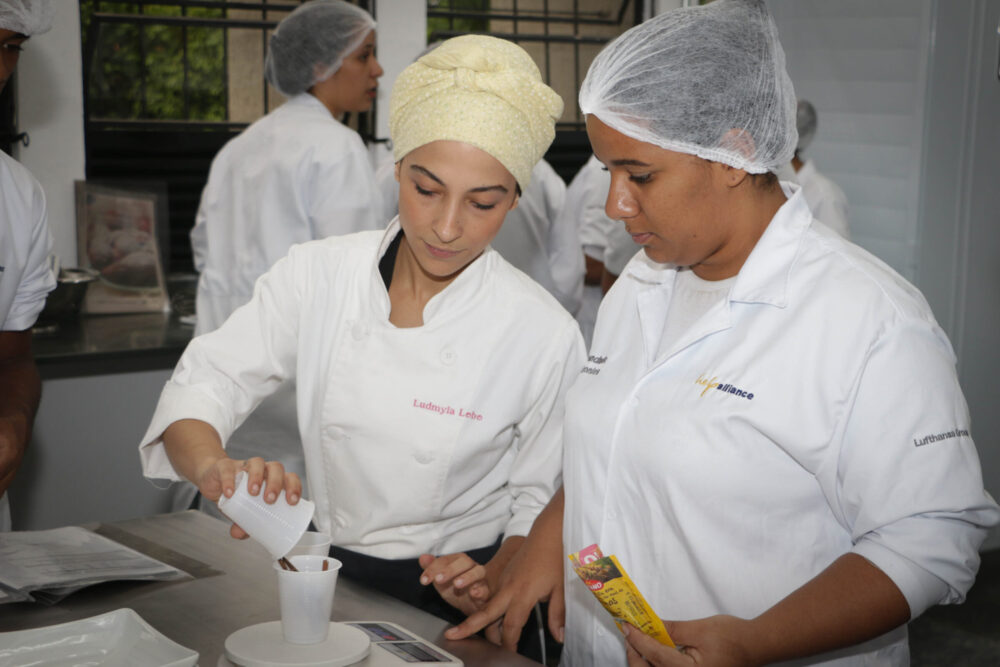
In order to prepare the young people as well as possible for the labor market, they receive one year of practically oriented training in the bakery trade. Classes take place from Monday to Friday and include theoretical and practical modules (the practical modules take place in the kitchen laboratory, which was previously financed by help alliance). At the end, students who achieve a minimum score in the tests, in the final project and in the class frequency receive a valid certificate (the curriculum has been validated by the Brazilian Ministry of Education). The curriculum is open enough to prepare students for employment in other segments of the food industry, including restaurants, hospitals, hotel chains and others. Students are taught not only practical skills, but also topics such as entrepreneurship, critical thinking, and social and environmental responsibility.
THE PROMOTION OF THIS PROJECT IS COMPLETED
However, we still support many other projects in the region.
To the projects